Learning to read does not begin with flashcards. It begins with conversation, songs, stories and a lap to sit on. By the time children are ready for formal reading instruction, they have already spent years building the skills that make it possible.
What early literacy really means
Early literacy is everything a child knows about language, sounds and print before they can read: understanding that words carry meaning, hearing rhymes, recognizing letters and knowing how a book works. These skills grow best through everyday moments, not drills.
Six habits that make a difference
- Talk all day. Narrate what you are doing at the grocery store or in the bath. Rich conversation builds vocabulary.
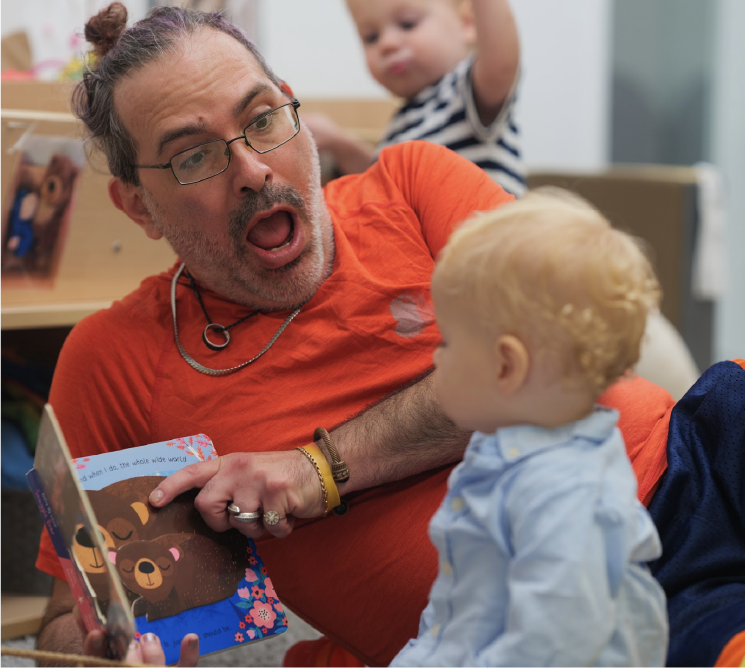
- Read together daily. Even ten minutes counts. Let your child choose the book, even if it is the same one again.
- Sing and rhyme. Songs break words into sounds and syllables, a key pre-reading skill.
- Point out print. Street signs, menus and cereal boxes show children that letters are everywhere and useful.
- Ask open questions. “What do you think will happen next?” invites children to predict and retell.
- Let them “write.” Scribbles, shopping lists and letters to grandparents are all early writing.

What this looks like in our classrooms
In our preschool rooms, literacy is woven into the day. Children dictate stories about their drawings, label their block structures, find their names on the morning chart and gather for read-alouds that often spark new projects.
Don’t rush it
Every child arrives at reading on their own timeline. The goal in the early years is not early reading; it is a child who loves stories, enjoys words and feels confident with books. That love is the strongest predictor of the reader they will become.